

Orientation
The intelligence we still have—and are only beginning to understand

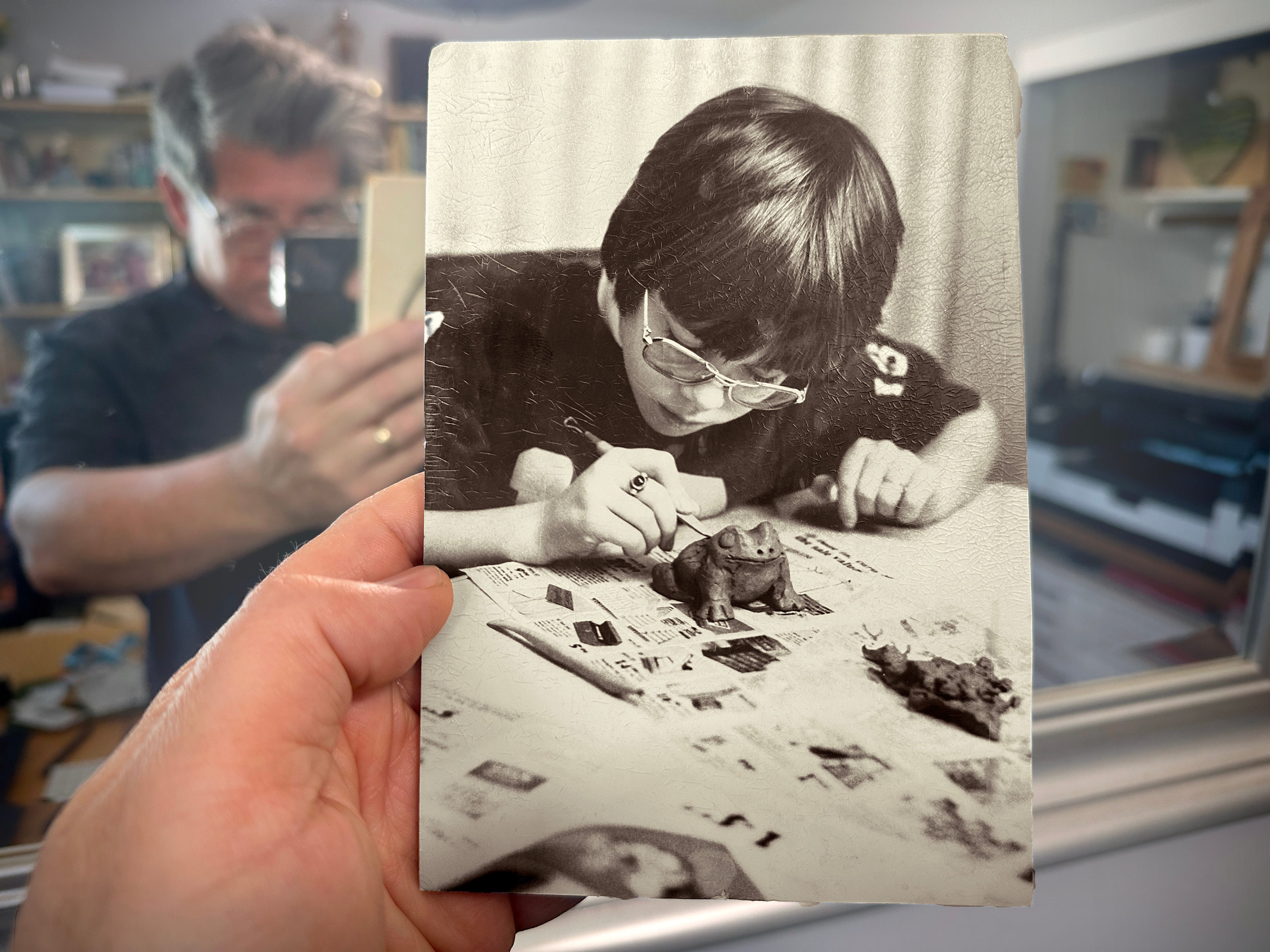
You never know what the future brings.
That’s the common phrase. It’s repeated so often it starts to sound like a law of nature—almost comforting in its uncertainty.
But the longer I sit with it, especially in a world shaped by artificial intelligence, the less complete it feels.
Because while it’s true that we don’t know the future as a fixed outcome…
We are not exactly strangers to it either.
We anticipate.
We lean into it.
We feel drawn toward certain directions before we can justify them.
And that difference—small at first glance—turns out to be critically important.
Prediction is everywhere. Orientation is rare.
We are entering a world saturated with prediction.
Machine learning systems can:
forecast behavior
generate images
complete language
simulate outcomes across vast datasets
They are, in a very real sense, prediction engines.
And they are getting very good at it.
But something subtle happens when prediction becomes abundant:
It stops being the thing that differentiates us.
What remains—what becomes more visible, not less—is something else:
orientation.
What orientation is
Orientation is not about knowing what will happen.
It’s about how you position yourself in relation to what could happen.
It is the ongoing alignment between:
what you perceive
what you value
and what you choose to do
…in the presence of uncertainty.
Prediction asks:
→ What is likely to happen?
Orientation asks:
→ Given everything, where do I move?
This is not abstract. It’s something we use constantly—often without naming it.
You feel when something is off, even before you can explain why.
You sense when a direction is alive, even if it’s risky.
You move—not because you’re certain—but because standing still feels wrong.
That is orientation.
A structure we can actually see
Orientation isn’t vague. It has a structure.
1. Perception (contact with reality)
Before analysis, there is direct contact.
Something registers:
a tension
a mismatch
a possibility
This is not yet thought. It’s closer to what the neuroscientist and philosopher Ned Block points to when he distinguishes between seeing and thinking.
You are already in contact with the world before you explain it.
And that contact is constantly correcting you.
2. Value (what matters)
Not everything you perceive calls you forward.
Orientation requires a pull.
Something matters more than something else.
This is where the future quietly enters the present—not as a fact, but as a directional force.
You don’t yet know the outcome.
But you can feel the gradient.
3. Action (commitment under uncertainty)
Orientation becomes real only when it results in movement.
A decision.
A step.
A creation.
This is where prediction ends and responsibility begins.
The bridge across time
We often think of time in three simple categories:
past (what has happened)
present (what is happening)
future (what will happen)
But orientation reveals something more interesting.
It’s the bridge across all three.
The past informs you
The present corrects you
The future pulls you
And orientation integrates them into a single act.
This idea has a long philosophical lineage, even if we don’t always name it.
In the work of Charles Sanders Peirce—an analytical thinker working in a rapidly changing scientific era—there’s a concept called final causation.
The idea is simple, but strange:
Not all causes come from the past.
Some come from the future—through the pull of what is not yet realized.
You don’t need the terminology to recognize the structure.
Every goal you’ve ever acted on…
Every image you’ve ever tried to bring into existence…
Every idea you’ve followed before it was clear…
—all of them were guided by something that did not yet exist.
Where AI fits—and where it doesn’t
AI systems are extraordinary at prediction.
They can map patterns across enormous possibility spaces.
They can simulate outcomes at scales no human can manage.
But they do not orient.
They do not:
stand inside a decision
carry stakes
commit under uncertainty
feel the difference between what is empty and what is alive
They extend cognition.
They do not replace orientation.
And something even more interesting happens because of this:
As AI becomes better at prediction,
orientation becomes more visible as a distinctly human capacity.
A return to the image
Going back to that picture of me — a kid working on a sculpture.
No clear plan.
No defined outcome.
No predictive model guiding the process.
And yet—
There is direction.
Not randomness. Not certainty.
But something in between.
A movement forward.
That is orientation in its most natural form.
Before language.
Before optimization.
Before strategy.
The risk (and the discipline)
Orientation is not infallible.
Without grounding, it can collapse into:
projection
ideology
wishful thinking
So it requires discipline:
perception must stay sharp (error correction)
action must stay real (feedback from the world)
commitment must stay flexible (adjustment over time)
Orientation is not belief.
It is adjustable alignment.
Where this leaves us
You never know what the future brings.
That line is still true.
But it’s incomplete.
A more honest version might be:
You don’t know the future as a fixed outcome…
but you are constantly orienting within it.
And in a world increasingly defined by prediction,
orientation may be the form of intelligence that matters most.
This living human intelligence is still at the center of creative action.
Machine Prediction tells me what might happen.
Human Orientation determines what I can do about it.
Join the conversation
If this resonates, I’m building this out in public—across photography, philosophy, and the changing nature of creative work.
Feel free to share your own examples of moments where you knew the direction without knowing the outcome.
That’s where this idea becomes real.